Drive execution
excellence everyday
As the portfolio expanded and market complexity increased, the organisation aligned its go-to-market architecture, intensified distribution focus and embedded analytics into frontline decision-making.

Build top-quartile execution capabilities through consistent everyday execution

Strengthen and accelerate emerging channels

Embed best-in-class processes across the organisation

Step up cost savings and efficiency improvement across the value chain
SHARPENING GO-TO-MARKET (GTM) ARCHITECTURE
To enable requisite focus on growth categories, a structured review and recast of some of the elements of the sales infrastructure was undertaken for the next phase of transformation.
ALIGNING GTM STRATEGY WITH AN EVOLVING PORTFOLIO
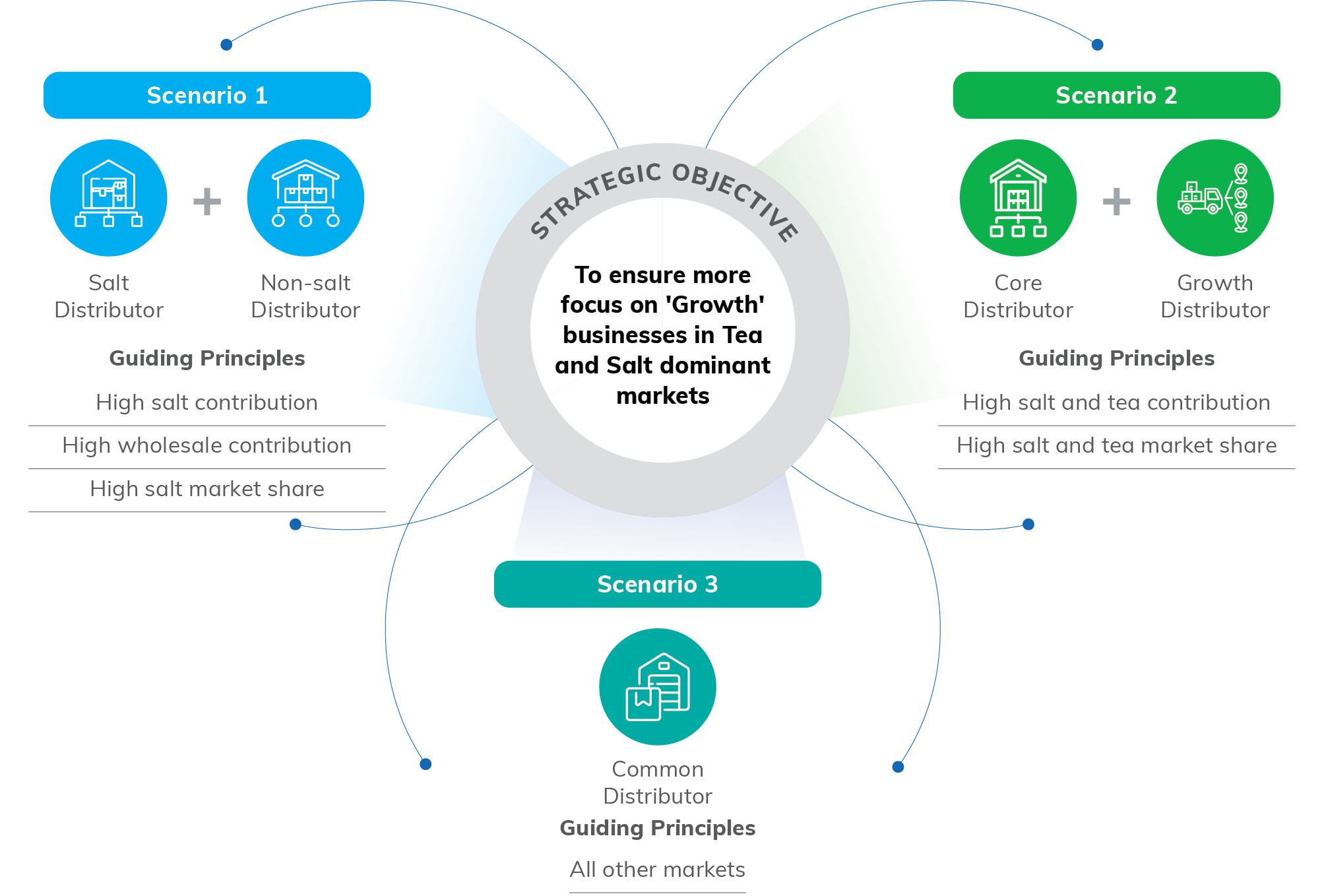
The sharpened Go-To-Market architecture aligned portfolio categories with execution intensity. It provided clearer supervisory alignment, enhanced frontline accountability and scalable distribution infrastructure capable of supporting long-term growth across diverse markets.
SCALING DISTRIBUTION INTENSITY IN GENERAL TRADE
General trade continued to serve as the foundation of scale and market presence. During the year, targeted investments were made to strengthen both primary and secondary distribution infrastructure, enhancing route efficiency, outlet coverage and service frequency across urban and rural markets.

EXPANDING THE SUPER STOCKIST NETWORK
A stable primary distribution backbone is fundamental to ensuring availability and service reliability at scale. The Super Stockist network was expanded to enhance servicing capacity, improve regional responsiveness and strengthen supply continuity across markets.
37%
Expansion in Super Stockist Base
PRECISION-LED EXECUTION IN URBAN CLUSTERS
A structural transition across priority 100 towns introduced a Split Distributor model, combined with portfolio-level supervisory separation. The revised structure, executed in 55 days, enabled clearer category ownership and improved execution depth across urban clusters.
EXTENDING RURAL LAST-MILE REACH
Addressing last-mile reach for rural growth, the Sub-Distributor network was further strengthened to deepen village coverage, improve servicing intensity and enhance infrastructure depth across high-potential rural clusters. Improved distribution capability supported stronger rural momentum during the year.

Sub-distributor network expanded by
3,000+
villages during the year, taking total direct coverage to
16,000+
villages
~60%
Penetration achieved across villages with population above 10,000
EXPANDING OUR DIRECT DISTRIBUTION FOOTPRINT
Direct Distribution strengthened numeric reach and improved market visibility. This has supported faster New Product Development rollout, improved stock freshness and enhanced execution control across priority outlets.
ESTABLISHING THE PHARMA CHANNEL
We introduced the Pharma channel to expand our presence across pharmacy-led retail formats and improve accessibility of the health and wellness portfolio through healthcare outlets. During the year, we built the distribution infrastructure, expanded retail listings and deployed dedicated field teams to support the rollout of this channel across multiple markets.
150 distributors
Supporting pharmacy channel distribution
55,000 outlets
Listed pharmacy retail outlets
55 cities
Operational presence across India
DIVERSIFYING MODERN TRADE
Modern Trade sustained strong momentum, supported by account diversification and expanded format presence. In beverages, market share gains moved the business closer to leadership positioning. Execution priorities in Modern Trade included broad-based, well-rounded growth across formats and accounts.
20%
YoY growth in Modern Trade
Scaling E-commerce (Including Quick Commerce)
We continued to grow our presence in digital marketplaces as online purchasing behaviour strengthened across markets. Our focus during the year was on expanding platform partnerships, improving assortment visibility and enhancing execution across leading online retailers. We also maintained our leadership in the Tea category while accelerating growth in emerging segments across digital platforms.
19%
Salience of E-commerce (including Quick Commerce)
81%
Growth in emerging categories
48 months
Consistent market leadership in the Tea category
34%
Growth in core categories

EXPANDING THE FOOD SERVICES CHANNEL
We made strong progress in building our Food Services channel by expanding distribution infrastructure and establishing dedicated field capability across key consumption centres. During the year, we increased our presence across cities, onboarded new distribution partners, and deepened engagement with institutional customers including leading hospitality groups.

across India
channel expansion
in the first year
ENHANCING FRONTLINE AND PARTNER CAPABILITIES
Sustained execution requires structured capability building across teams and partners. Training man- hours increased five-fold versus the previous year, covering distributor sales representatives, distributors and sales managers.

TECHNOLOGY AS A CORE EXECUTION ENABLER
PAN-INDIA ARS ROLLOUT
The Automated Replenishment System (ARS) is operational across urban and rural distributors. By aligning replenishment decisions with secondary sales data, distributor inventory days reduced, resulting in enhanced working capital efficiency and strengthened distributor-level return metrics.
of General Trade sales contributed by the Artificial Intelligence-powered Recommendation Engine

AI-LED SALES INTERVENTIONS
Multiple digital enablers were deployed to transform frontline execution.

ENABLING EVERYDAY EXECUTION EXCELLENCE WITH
SALES ANALYTICS CENTRE OF EXCELLENCE
The purpose of establishing the Centre of Excellence (CoE) was rooted in enhancing the productivity of the sales team by helping them make better decisions and enabling them to focus on what truly mattered—Better Execution Every Day.

Data-driven productivity
Automated dashboards provide near real-time visibility into coverage, geo-adherence, call productivity and order behaviour, which accelerates feedback loops and strengthens mentoring effectiveness.

Smarter outlet prioritisation
Advanced analytics classify outlets by potential and strategic relevance, ensuring differentiated coverage for high-value outlets and targeted SKU focus.

Improving Assortment and basket size
ML-driven assortment recommendations identify SKU gaps and cross-sell opportunities, identifying specific white spaces to improve lines per order.

Nurturing New Product Development
Near real-time tracking of new product performance enables focused intervention where adoption requires reinforcement.

Billing discipline and coverage
Automated Month-to-Date unbilled outlet visibility ensures proactive follow-ups and improved beat discipline.
Sales Force Automation-led orders
Range per outlet
ADVANCING STRUCTURED REVENUE GROWTH MANAGEMENT
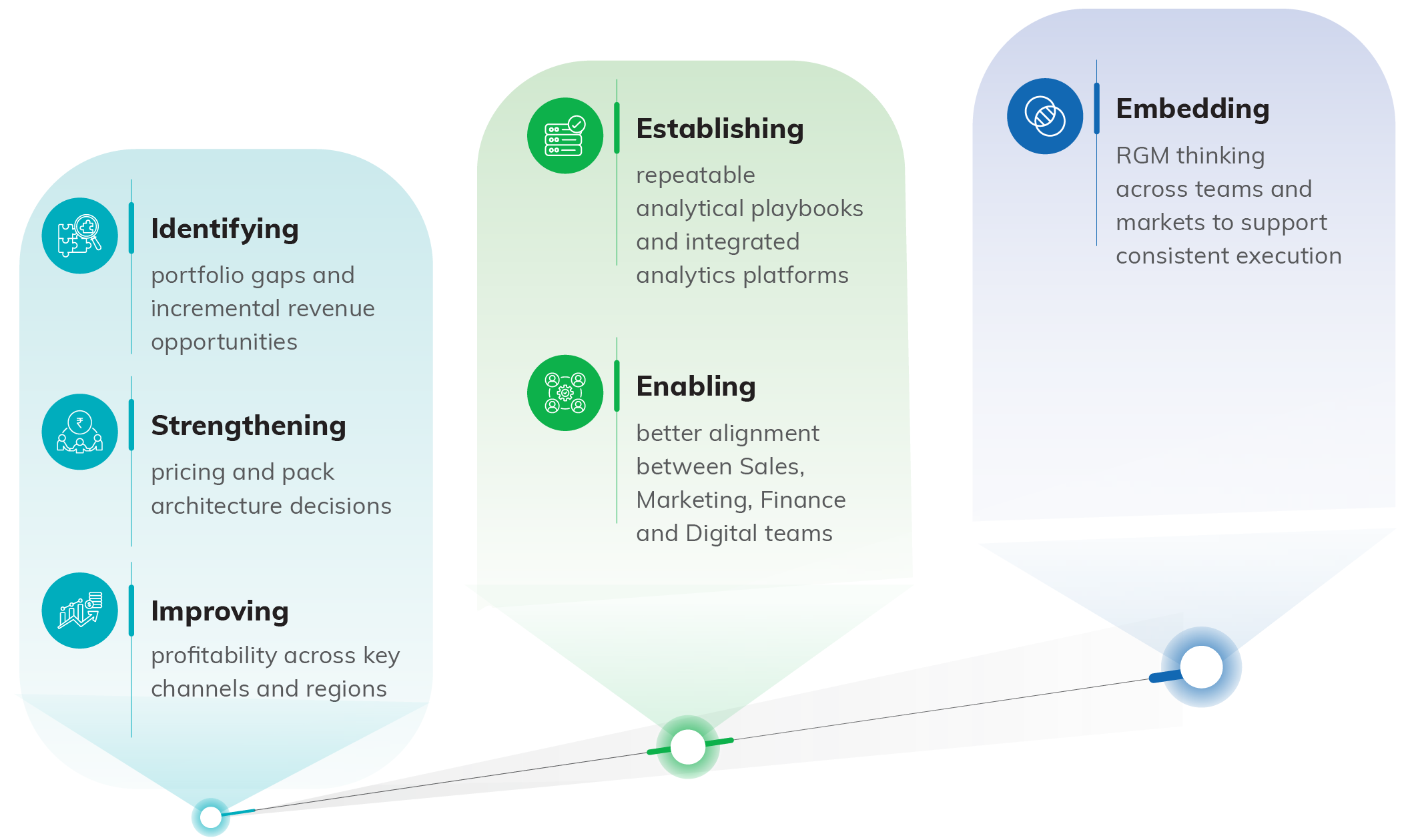
Revenue Growth Management (RGM) plays an increasingly important role in balancing growth with profitability. The function has evolved from providing tactical analysis over the last three years to now a structured capability, supporting enterprise decision-making.
STRENGTHENING ANALYTICAL PLAYBOOKS
Revenue Growth Management delivered actionable insights across portfolio mix, pricing architecture, pack strategy and channel profitability. Going forward, structured analytical playbooks will guide trade investment decisions and pricing frameworks.

KEY RGM EXECUTION OUTCOMES
Strengthening
procurement and working
capital discipline
Advancing the agri-commodity procurement platform by furthering digital and AI-led interventions to strengthen forecasting and optimise sourcing decisions. Along with an expansion of the vendor base and strategic inventory positioning during market dips, this allowed for resilience against volatility and delivered favorable outcomes in critical commodities including tea, staples, pulses, and dry fruits. These efforts were complemented by disciplined working capital management, unlocking value across the portfolio.
Enhancing
manufacturing and
network efficiency
Network optimisation across multiple categories enhanced cost efficiency and service levels, while lean and manufacturing excellence programmes drove superior asset utilisation and benchmark yields across Solubles. Digitisation of utility and process monitoring systems further elevated factory performance, underscoring the commitment to efficiency, quality and sustainable growth.
Improving
service levels across
channels
Driving material improvement in service levels across channels, in particular Modern Trade, E-commerce including the fast growing Quick-Commerce channel. Centralised delivery planning and faster fulfilment cycles led to improved reliability and enhanced customer engagement.

INSTITUTIONALISING CONTINUOUS IMPROVEMENT
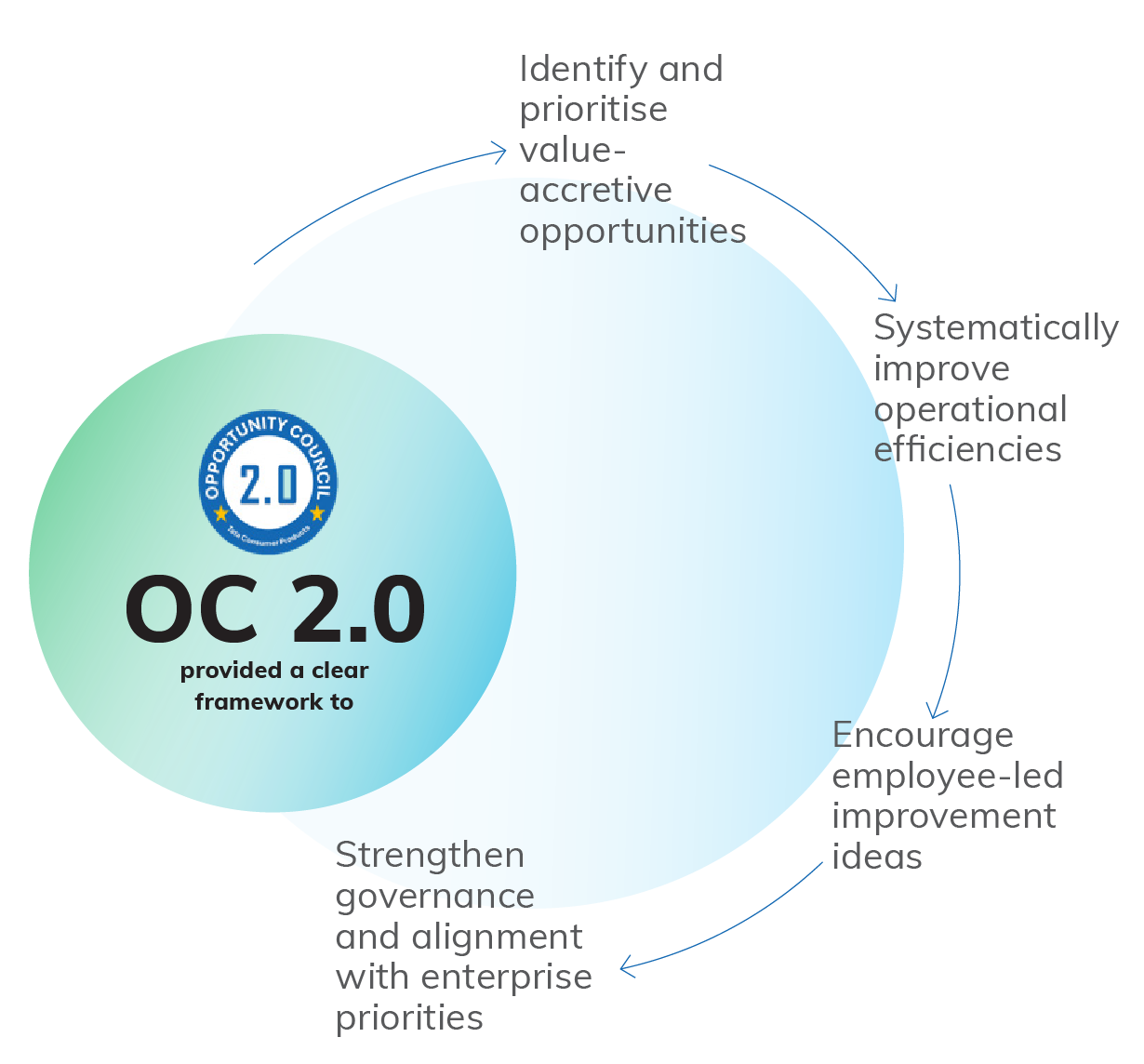
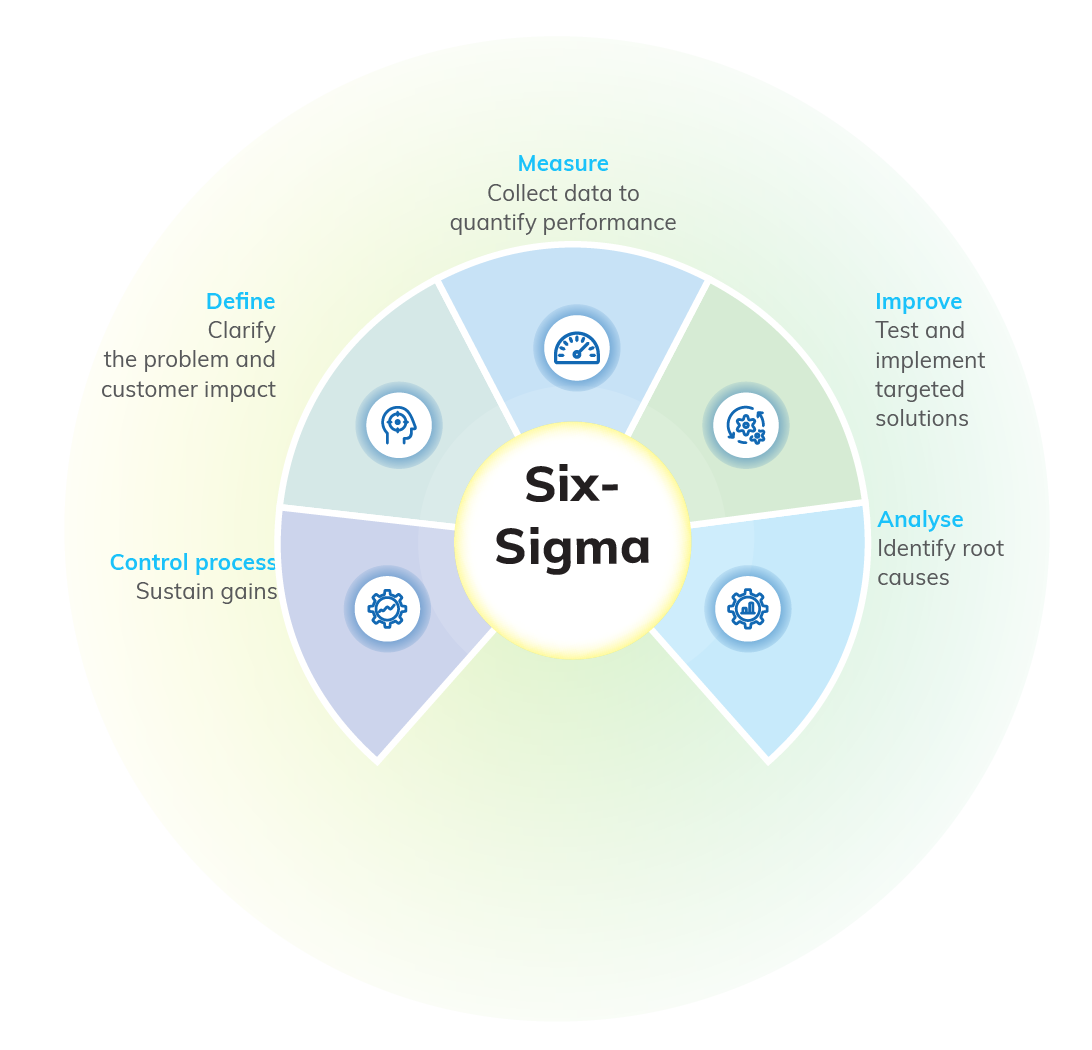
As scale expands, structured cost discipline and operational efficiency become increasingly important. Six Sigma and Opportunity Council 2.0 (OC 2.0) established an enterprise-wide framework for identifying, prioritising and delivering efficiency initiatives.
Improvement opportunities were identified across the business