


Governance at
the Core of ESG
At Tata Consumer, we view growth as a shared journey that creates meaningful impact for our business, our people and the wider ecosystem of stakeholders including consumers, partners and the communities we engage with. As a leading player in the FMCG (fast moving consumer goods) sector where agility and timely consumer insights are crucial, this perspective shapes the way our ESG Leadership and Oversight frameworks guide responsible progress and long-term value creation.
The Tata Group’s emphasis on ethical business conduct and social responsibility ensure that ESG considerations are embedded in our governance strategy and integrated across our operations. Guided by a longstanding culture of trust and innovation, our leadership team prioritises transparency and meaningful stakeholder engagement, strengthening confidence in the Tata Consumer brand.
This commitment to ESG principles shapes the way we navigate the dynamic FMCG landscape and helps us respond to critical present day needs while building the capabilities required to support the long-term well-being of our stakeholders.
ESG Oversight and
Accountability Framework
TCP’s sustainability governance framework is designed to drive strong oversight and effective management of our sustainability agenda. It is supported by a structured system comprising the Board’s CSR and Sustainability Committee, the Sustainability Steering Committee and the Working Group, each with clearly defined roles and responsibilities.
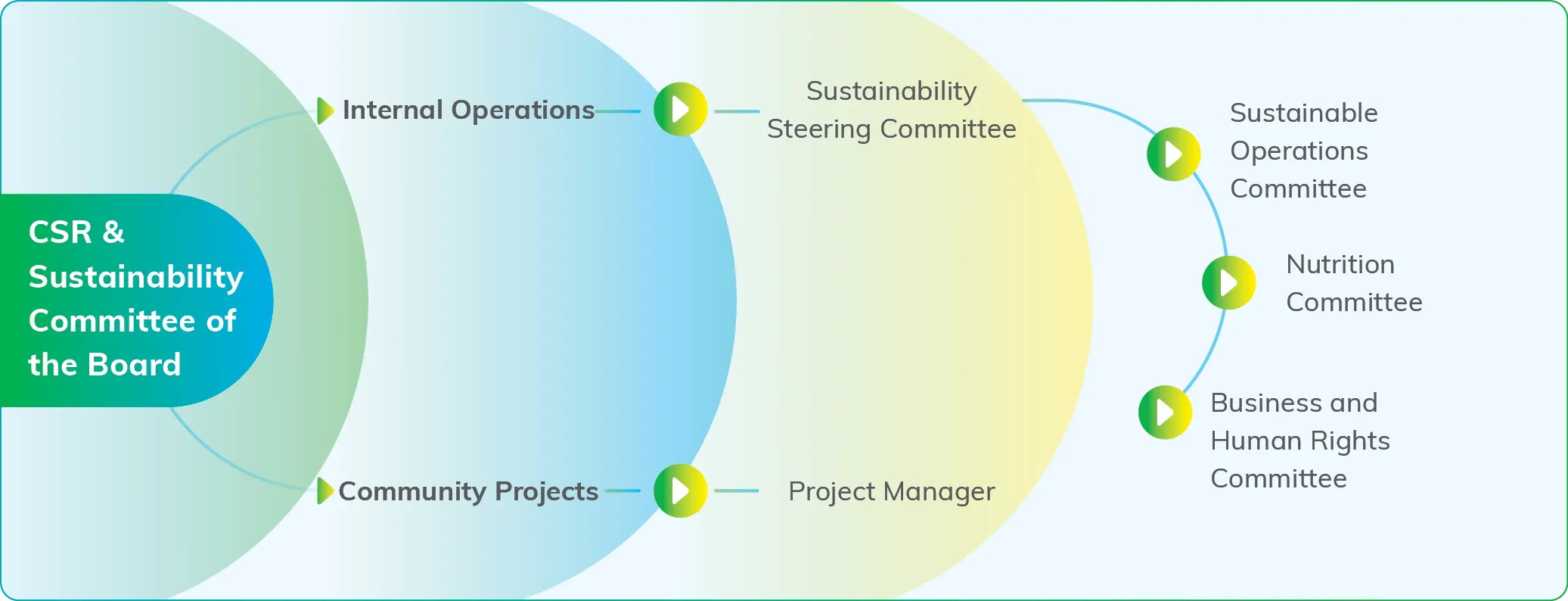
Board’s CSR and Sustainability Committee:
This body sets the organisation’s sustainability goals and targets, and is accountable for driving our overall sustainability agenda.
Sustainability Steering Committee:
This group is responsible for implementing TCP’s sustainability strategy. It uncovers opportunities for new initiatives, oversees the execution of CSR and sustainability projects and is accountable for risk management and resource allocation to advance our sustainability agenda.
Working Group:
The Working Group aligns with pillars of our sustainability strategy and comprise the Nutrition Committee, Business and Human Rights Committee and the Sustainable Operations Committee.
Committee | Responsibilities | Topics Covered | Members & Functions | Frequency of Meetings |
|---|---|---|---|---|
 CSR and Sustainability Committee | Set up a monitoring process to ensure that TCP’s actions remain aligned with stakeholders’ interests |
| Non-Executive Independent Directors
Executive Director & COO | At least twice a year |
 Sustainability Steering Committee | Develop the sustainability strategy and monitors its execution |
| Executive Director & COO
Group CFO and Global CHR & Sustainability Officer | Quarterly |
 Nutrition Committee | Evaluate the nutritional impacts of TCP's products on consumers |
| Senior representatives of Marketing and R&D functions | Quarterly |
 Business and Human Rights Committee | To support the welfare and protection of employees by ensuring compliance with the organisation’s Guidelines on Business and Human Rights and the Modern Slavery Statement |
| Senior representatives from Sustainability, Legal and Compliance, HR, Procurement, Operations/ Logistics, Sourcing and Employee Engagement | Quarterly |
 Sustainable Operations Committee | Forms working groups to drive sustainability projects and oversees their progress |
| Senior representatives from Operations, HR, Environment, Health and Safety (EHS) | Quarterly |
TCP has delivered consistent organic and inorganic growth, with sustainability embedded in its business strategy. Significant investments have driven steady year-on-year progress toward sustainability goals, positioning the Company well for long-term objectives. Participation in external ESG assessments helps benchmark against industry best practices across areas such as climate, biodiversity, and water stewardship. As a result, the Company continues to earn strong ESG ratings and has been recognised in the S&P Global Sustainability Yearbook for two consecutive years, reflecting the strength and consistency of its sustainability performance.
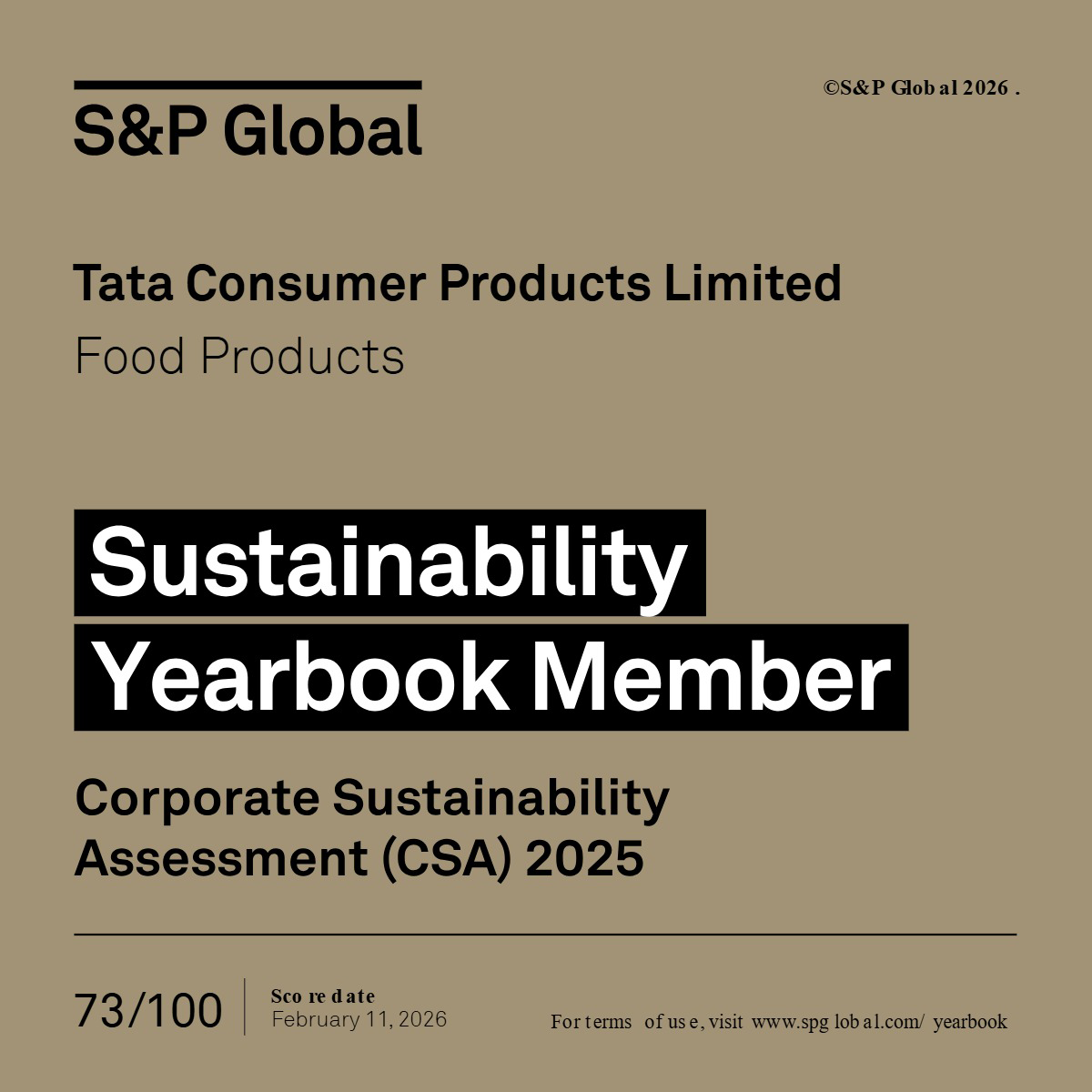
To advance our sustainability agenda, established clear and structured targets aligned with our long-term commitments. Our robust ESG governance framework provides regular oversight and timely guidance, ensuring we remain on track while driving measurable progress across priority areas.
To maintain steady progress and accountability, each ESG target is embedded within the Key Result Areas (KRAs) of employees across the organisation, from senior leadership to frontline teams. Employees’ progress against these targets forms an integral part of annual performance evaluations, reinforcing shared commitment to sustainability throughout the organisation.