
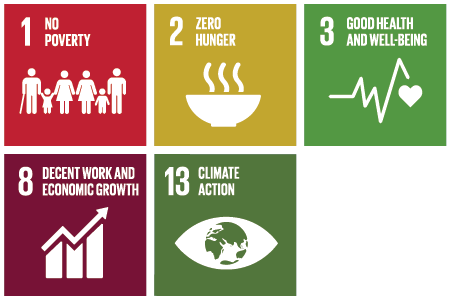
Contribution to UNSDGs
For Better

Sourcing
Driving Value Chain Sustainability
The ‘For Better’ Sourcing pillar embodies TCP’s commitment to developing a sustainable value chain by embedding economic, environmental and social considerations throughout our operations.
VISION
Sustainable value chains from farm to shelf.
TARGETS
100%
critical supplier assessments across all geographies

STAKEHOLDERS IMPACTED

Consumers

Communities

Industry Associations
MATERIAL ISSUES
- Responsible Sourcing
- Value Chain Management
- Human Rights in Value Chain
- Biodiversity
- Decarbonisation and Achieving Net zero
- Access to Nutrition
CAPITALS IMPACTED
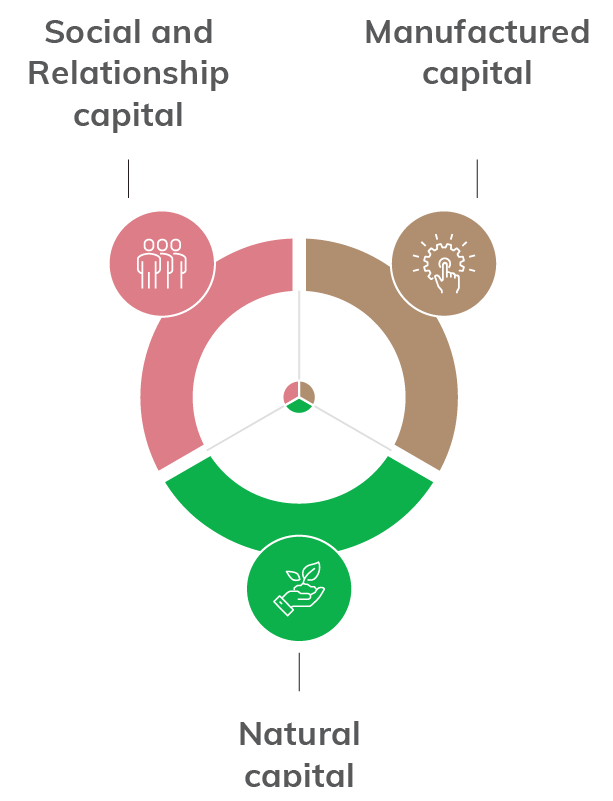
INTERLINKAGE OF CAPITALS
PERFORMANCE HIGHLIGHTS
of Tetley Tea and Good Earth in our international markets, and our plantations in India are Rainforest Alliance certified.
of tea procured in FY 2025-26 by TCP is certified by trustea.
MANAGING OUR VALUE CHAIN
Sourcing Sustainably
At Tata Consumer Products, we strive to source all our materials sustainably and carry forward these efforts across our value chain. These efforts span our entire portfolio, covering tea, coffee, water, and staples such as pulses, ensuring that every product reflects our commitment to responsible sourcing. Ultimately, we aspire to build supply chains that are resilient, ethical and aligned with our long-term environmental goals.
As a founding member of initiatives such as the Ethical Tea Partnership (UK) and trustea (India), we take the lead in advancing sustainability in the tea sector. This involves encouraging sustainability across the tea value chain, from cultivation practices to the final cup enjoyed by consumers.
To put this commitment into practice, our #ForBetter Sourcing strategy follows a structured three step process: Define, Identify and Engage. This framework is driven by a dual expectation that materials must not only be sustainable but also responsibly produced. Through this approach, we work to minimise the environmental footprint of our sourcing activities while upholding ethical labour and manufacturing standards. Thus, we strive to ensure that the resources we rely on support both planetary well-being and the long-term health of our business.
TCP’s commitment to sustainability is evident in the development of a supply chain framework that promotes resilience and responsibility. This framework guides us to establish clear policies, as well as metrics to assess supply chain sustainability and help us manage risks. It also ensures we prioritise regulatory compliance while systematically strengthening our sustainability performance across the value chain.
SUPPLY CHAIN FRAMEWORK
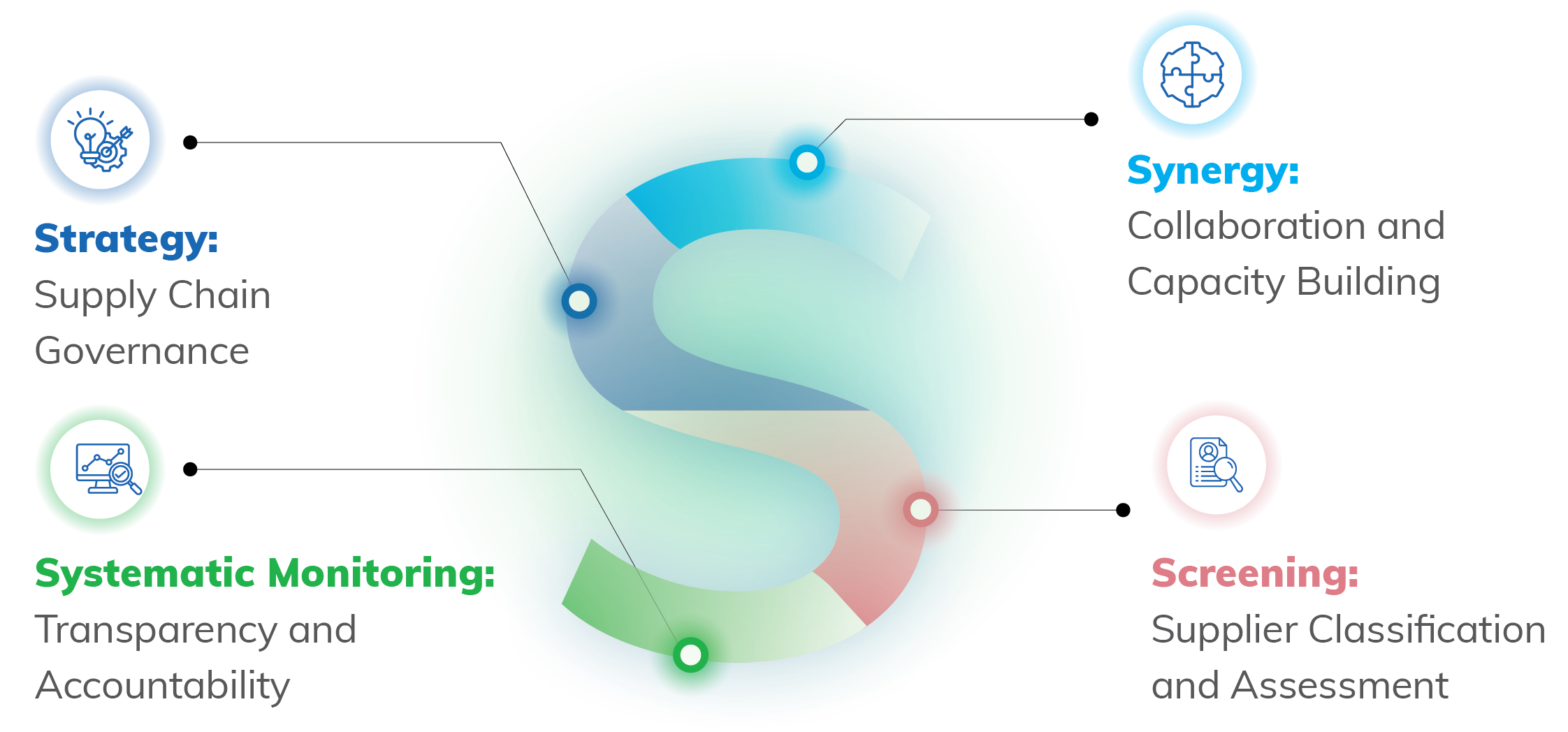
STRATEGY: POLICY-LED GOVERNANCE
Our strategy to create a sustainable value chain focuses on measures that strengthen supplier relationships, reinforce risk management and encourage responsible practices across supply chains, guided by various policies. It extends to all players in our supply network, including farmers, third party manufacturers, service providers, transporters, suppliers of agricultural and non-agricultural materials, franchisees, dealers and distributors.
Our Sustainable Supply Chain Policy, outlines the principles that shape our engagement with partners and encourages them to uphold the same standards as TCP. It also helps synergise our other key policies, namely, Green Procurement Policy and the Supplier Code of Conduct making it easier to embed responsible practices consistently across our value chain.
The Green Procurement Policy and Sustainable Supply Chain Policy require all suppliers to align their business practices with our sustainability objectives, such as reducing natural resource consumption, optimising plastic usage, obtaining external certifications like ISO 14001 and 50001, and creating environmental consciousness among their supply networks.
The Supplier Code of Conduct comprehensively details the environmental, social and governance criteria we require suppliers to adhere to in their businesses and is mandatorily included in supply contracts. Instances of non-adherence are viewed seriously and suppliers face the risk of termination of our contract with them. In this way, we ensure that TCP’s sustainability objectives are not just fulfilled but also cascaded across the supply network.
In addition, we mandate adherence among our suppliers with the Tata Code of Conduct. To help them align their practices with ours, our Business and Human Rights Working Group builds provides training on key human rights risks. It also oversees the development, monitoring and review of supplier related risk assessments and audits. In addition, we encourage our suppliers to explore ESG linked opportunities and to identify, address and manage risks within their own operations.
Each year, we engage with our suppliers on all key policies and standards including the Anti Bribery Policy, Business and Human Rights Policy, Supplier Code of Conduct, Green Procurement Policy, Tata Code of Conduct, and the relevant Memorandum of Understanding or Agreement. This engagement helps to secure their acknowledgment and consent to TCP’s contractual requirements.