

Risk management
Navigating Growth with Strategic Prudence
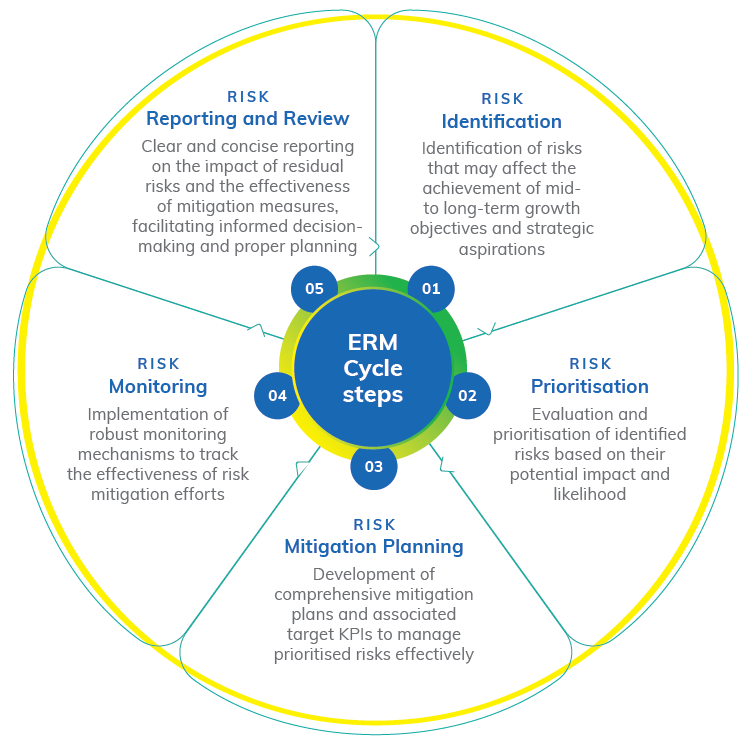
We operate in a dynamic landscape characterised by a diverse range of risks and opportunities that shape our strategic direction. Our risk management framework enables us to remain resilient throughout economic cycles while adapting to evolving stakeholder expectations. Through our Enterprise Risk Management (ERM) framework, we identify material risks that could impact the business and address them in a structured and effective manner.
As the environment continues to evolve rapidly, we remain proactive and forward-looking, maintaining a robust and disciplined approach to navigating change while ensuring ongoing alignment with the latest developments.
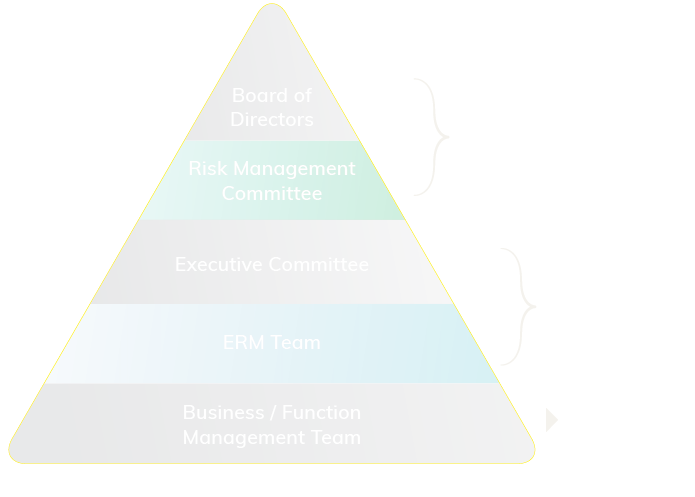
RMC comprises Independent Directors, whereas the Executive Committee (EC) consists of MD and CEO, ED and COO as well as Group CFO
RMC
RESPONSIBILITIES
Overseeing the adequacy and effectiveness of the Company's risk management framework and process
Provide guidance on risk management strategies
EC
RESPONSIBILITIES
Conducting periodic reviews of significant risk exposures and ensuring that appropriate mitigation measures are in place
Monitoring the effectiveness of mitigation plans through associated target KPIs
RISKS AND MITIGATIONS
FINANCIAL AND OPERATIONAL RISKS

Commodity Sourcing
Agri commodities are subject to seasonal variations and market cyclicality. Volatility in commodity prices and availability may adversely affect our business, operations and cash flows
Mitigations Implemented
Implemented an integrated commodity sourcing organisation, inclusive of acquired entities, to serve as a foundational pillar for future growth initiatives
Proactively monitored and assessed the commercial implications of commodity price fluctuations to enhance working capital efficiency
Maintained strategic inventory positions, including opportunity buying, based on robust market intelligence for key raw materials
Achieved sourcing synergies through consolidation of volumes for common raw materials across all businesses of TCPL
Forged strategic partnerships with key producers to enhance sourcing flexibility and adaptability
Expanded the vendor network and diversified sourcing geographies with a focus on sustainability
Enhanced digital solutions to enable end-to-end management of commodity sourcing
Strengthened sourcing and supply chain resilience to support reliable procurement and delivery

Changing Consumer Preferences
Shift in consumer preferences within our product categories could negatively impact our growth trajectory
Mitigations Implemented
Continuously track consumer trends and category growths, aligning our strategies and growth plans accordingly
Strengthened investment in R&D to address emerging consumer needs
Implemented strategies to diversify our presence in adjacent categories in line with evolving consumer preferences
Increased emphasis on cross-functional ideation forums and external collaborations to drive disruptive innovation
Launched multiple new products and extensions within flagship brands, maintaining a competitive Innovation-to-Sales ratio in line with industry benchmarks
Introduced innovation guardrails to track NPD progress, enforce disciplined stage gates and eliminate underperforming initiatives at an early stage
Developed sustainable, purpose led products that resonate with evolving consumer expectations, delivered through an omnichannel ecosystem integrating digital and physical consumer journeys.

Sales and Distribution
Limited distribution expansion in growing categories and newly acquired businesses, as well as channel shifts, may impact profitability
Mitigations Implemented
Implemented a next generation Distributor Management System (DMS) to enable better planning, expand coverage and improve productivity
Delivered targeted training to strengthen product and category knowledge across S&D channels for acquired businesses
Significantly expanded the distributor network across all regions, with plans to segment networks across growth and mature portfolios
Increased outlet coverage for new categories through improved assortment planning, incentive programmes and deployment of dedicated sales personnel
Introduced an Automatic Replenishment System to streamline inventory management across the distribution network
Developed channel- and region-specific strategies to drive both top line and bottom line growth
Strengthened monitoring of channel- and category- level profitability to optimise trade spend allocation
STRATEGIC AND REPUTATIONAL RISKS

Brand Equity
Failure to sustain and improve brand equity metrics may pose challenges to market share and future growth
Mitigations Implemented
Conducted detailed analysis of consumer trends to inform marketing strategies and respond effectively to evolving market dynamics
Maintained a strong focus on core product categories across multiple geographies to consolidate global brand presence and recognition
Established clear brand architecture and positioning for each brand, including those with acquired businesses
Implemented robust brand protection measures to guard against lookalikes and counterfeit products, including taking legal action where necessary
Optimised media investments strategically to strengthen brand equity and foster impactful engagement with our target audience
Deployed social listening tools to monitor brand and organisational sentiment in real time
Maintained competitive Advertising and Promotion-to-Sales ratios for key brands to enhance brand equity
Sharpened focus on expanding healthier product offerings while accelerating premiumisation across key categories to drive value growth
TECHNOLOGY AND STRATEGY RISKS

Cyber Security
The increasing incidence of cyber-attacks and data breaches across industries poses risks to the organisation’s operational resilience and reputation
Mitigations Implemented
Regular benchmarking of our architecture and infrastructure against recognised industry standards, including NIST and CSA, to ensure resilience
Secured cloud infrastructure through a Cloud Scale Zero Trust Network architecture, with a strong emphasis on data protection
Conducted regular employee awareness sessions and simulated phishing campaigns to strengthen cyber risk vigilance
Enhanced proactive monitoring capabilities using Safe Security and the Common Vulnerability Scoring System (CVSS) across the digital landscape
Measured cybersecurity KPIs aligned with NIST CSF guidelines
Undertaken periodic vulnerability assessments and penetration testing to identify and address potential security vulnerabilities
Conducted cybersecurity assessments in line with the Tata Business Excellence (TBEX) framework
REGULATORY AND FINANCIAL RISKS

Compliance and Reputation
Rapid changes across India’s regulatory landscape (including taxation, labour, consumer protection, labelling regulations, quality norms, cybersecurity, data privacy, advertising, environmental norms and corporate governance) may pose significant risks
Mitigations Implemented
As part of the Tata Group, we uphold the highest standards of business conduct through a holistic compliance framework implemented across all geographies and business units, including acquired entities
Conducted periodic monitoring and readiness assessments for upcoming legislative changes
Enforced a stringent Code of Conduct applicable to all employees and business partners to ensure regulatory compliance and ethical business practices
Implemented structured vendor due diligence, including anti-bribery and anti-corruption assessments, conducted biennially
Ensured organisation-wide compliance with the DPDP Act and evolving Labour Laws
Subjected all manufacturing facilities to regular food safety, Good Manufacturing Practices and safety audits, along with continuous monitoring and upgradation
Engaged actively with regulatory bodies, policymakers and industry associations to represent sector objectives
Strengthened accountability and compliance through regular capability-building initiatives and strong management sponsorship
Conducted ongoing quality evaluations on key suppliers to ensure adherence to stringent safety and regulatory standards
Conducted detailed Root Cause Analysis (RCA) of customer feedback and complaints to implement corrective actions where necessary
STRATEGIC AND FINANCIAL RISKS

Business Acquisition and Integration
Underperformance of acquired businesses relative to expectations
Mitigations Implemented
Implemented a comprehensive strategy to unlock the full potential of acquired businesses and realise integration synergies
Streamlined organisational structures to ensure effective resource allocation and clear accountability for growth delivery
Maintained strong senior management oversight and a robust governance framework to continuously evaluate performance and initiate corrective action where required
Deployed senior leadership from TCPL to foster a culture of accountability and compliance
Driven structured employee engagement, role clarity, policy harmonisation, inclusivity training, and alignment with organisational values and culture

External and Emerging Risks
Geopolitical uncertainties and other emerging and external risks may disrupt business operations
Mitigations Implemented
Continuous evaluation of short-term market volatility and long-term socio-economic and political scenarios to anticipate and adapt to potential disruptions
Engaged proactively with governments, local regulators and community organisations to anticipate policy changes and remain aligned with evolving regulatory frameworks
Reduced exposure to external trade disruptions through market diversification, resilient multi-sourced supply chains, flexible sourcing, advance inventory buffers and balanced commercial arrangements
Deployed resilient Business Continuity Plan (BCP) frameworks supported by diversified suppliers and rapid response mechanisms to maintain operational stability
STRATEGIC

Sustainability
Risks associated with climate change, carbon footprint, water scarcity, plastic, packaging waste and ineffective sustainable practices
Mitigations Implemented
Our sustainability strategy, anchored in the pillars of ‘Better Planet’, ‘Better Sourcing’, ‘Better Communities’, and ‘Better Nutrition’, guides our operations towards environmental and social responsibility.
Developed a structured roadmap combining long-term ambitions with short-term targets, regularly reviewed to reflect acquisitions and business changes
Implemented programmes to reduce energy consumption, increase renewable energy usage, foster circular economy practices and promote water stewardship.
Strengthened sustainable sourcing via partnerships with Trustea and Rainforest Alliance, fostering responsible supply chain practices.
Established a CSR and Sustainability Committee to oversee climate-related risks and ensure robust governance
Completed assessment aligned with the Task Force on Climate-Related Financial Disclosures (TCFD) for comprehensive climate risk management
Collaborated with government bodies and industry partners to support harmonised waste regulations, robust EPR frameworks and stronger recycling ecosystems
Leveraging R&D to optimise plastic reduction and evaluate alternative materials without compromising product integrity

People
Inability to attract and retain talent may hinder the achievement of business objectives
Mitigations Implemented
Foster a progressive culture and engaged workforce, focusing on employee well-being, diversity, inclusion, learning and development as well as career progression.
Implemented a structured succession planning framework to identify and assess internal and external talent, including for senior leadership roles, benchmarked against defined succession profiles
Harmonise policies, processes and systems across all mergers and integrated entities
Regularly benchmark flexibility policies against market standards
Implemented targeted employee well-being programmes
Introduced long-term incentive schemes as part of the talent retention strategy