

Materiality Assessment and Stakeholder Discussions
We believe that progress is truly sustainable when it is shared with our stakeholders, communities and the natural ecosystem. Contributing to this journey of growth is our assessment of materiality issues, which helps us understand the environmental, social, and financial impacts of our operations and discover newer opportunities for driving sustainable growth.
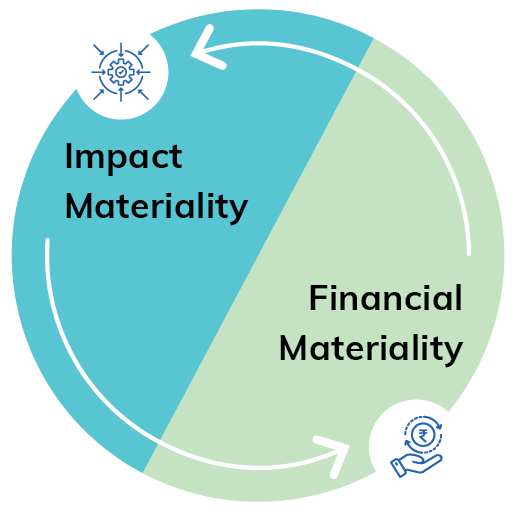
Following our protocol to re-visit our material topics, we undertook an extensive exercise in FY 2026 to undertake a Double Materiality assessment for the organisation.
This study, revisiting the material sustainability topics, holds relevance now, given the rapid inorganic growth the Company has achieved in the past three years. TCP has comprehensively examined the environmental and social impacts of our operations, and how sustainability related risks and opportunities could influence the Company’s financial outcomes. It also incorporated the perspectives of key stakeholders, providing insights that help us to focus our efforts and investments in areas where we can meet stakeholder expectations and create meaningful impact.
OUR APPROACH TO DOUBLE MATERIALITY ASSESSMENT
Identify Material Sustainability Issues and map their Environmental, Social, and Governance Impact pathways
Assess the Scale, Scope, and Remediability of Each Impact
Evaluate the Likelihood of Impact Occurrence and Derive the Overall Impact Materiality Score
Identify and Categorize Relevant Risks or Opportunities Across Business Triggers
Assess Financial Impact (including topline, bottom line, Regulatory Impact on Business Continuity, Business relationship)
Assess Likelihood of Occurrence to Derive the Overall Materiality Rating
Identify Material Sustainability Issues and map their Environmental, Social, and Governance Impact pathways
Assess the Scale, Scope, and Remediability of Each Impact
Evaluate the Likelihood of Impact Occurrence and Derive the Overall Impact Materiality Score
Identify and Categorize Relevant Risks or Opportunities Across Business Triggers
Assess Financial Impact (including topline, bottom line, Regulatory Impact on Business Continuity, Business relationship)
Assess Likelihood of Occurrence to Derive the Overall Materiality Rating
The double materiality assessment was conducted as per the guidance provided by Corporate Sustainability Reporting Directive (CSRD) for European Sustainability Reporting Standards (ESRS) reporting via the European Financial Reporting Advisory Group (EFRAG) prescribed guidelines. It also ensured alignment with recognised national and global frameworks, including the Sustainability Accounting Standards Board (SASB), the International Integrated Reporting Council (IIRC) Framework, major ESG assessment platforms, and the National Guidelines on Responsible Business Conduct (NGRBC), which form the foundation of the Business Responsibility and Sustainability Report (BRSR).
As part of this assessment, we conducted surveys and discussions, engaging with both internal and external stakeholders including the following:


In the process, we analysed industry trends and carried out market assessments. Together, these activities enabled us to identify the material issues most relevant to our business strategy and operational resilience. These insights, combined with the risk and opportunity scoring conducted in our financial and impact materiality steps, enabled us to identify and prioritise the issues most relevant to our strategy and operational resilience. Stakeholder perspectives further refined these priorities, allowing us to integrate the final set of material issues into our Enterprise Risk Management (ERM) framework. This comprehensive approach strengthens our long term roadmap by aligning our material priorities with business goals, sustainability commitments, and the UN SDGs. The material issues identified are illustrated in the matrix below.
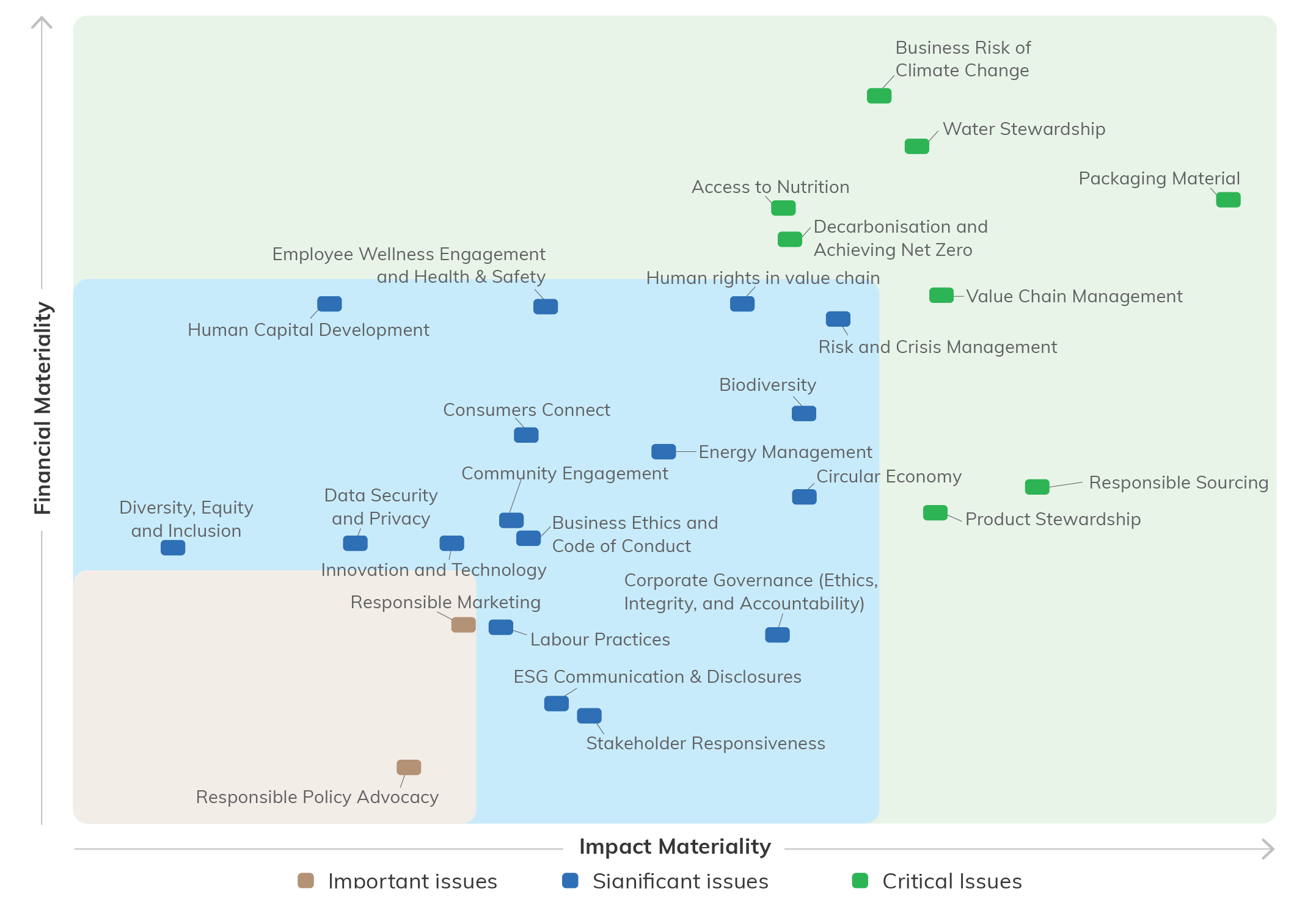
The views of the senior leadership of the Company and the Board CSR & Sustainability Committee have been incorporated in the entire exercise. The Board Committee is regularly updated on the Company’s performance on these material priorities, enabling ongoing oversight in line with strategic goals.
Going forward, we will continue to conduct a thorough double materiality assessment every three years. This will help us to remain responsive to evolving business dynamics and stakeholder expectations, ensuring our priorities are relevant and forward looking. This entire process of Double Materiality Assessment has also been independently assured by a third-party.